
AI SaaS Platforms: The Complete Guide to Building Intelligent Software for the Future
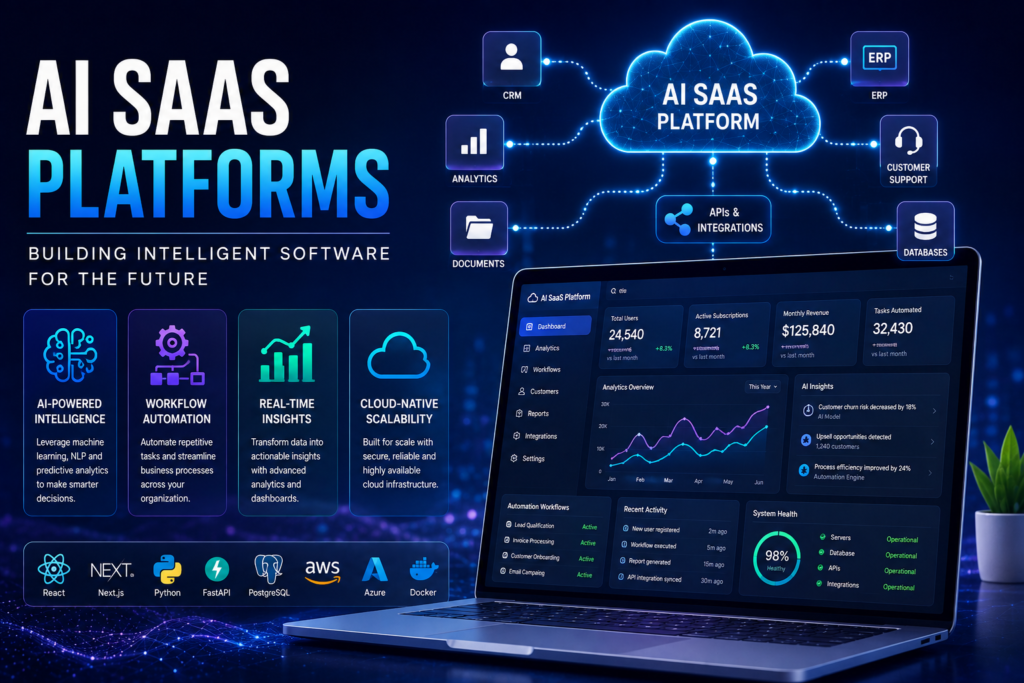
Software-as-a-Service (SaaS) has fundamentally changed how businesses develop, deliver, and consume software. Instead of installing applications on local servers or maintaining expensive infrastructure, organizations can now access secure, cloud-based platforms from anywhere in the world. As Artificial Intelligence (AI) continues to reshape modern business operations, a new generation of software has emerged—AI SaaS Platforms. AI SaaS platforms combine the flexibility of cloud computing with the intelligence of machine learning, natural language processing, predictive analytics, and workflow automation. These platforms do more than simply manage data—they analyze information, automate repetitive tasks, generate insights, personalize user experiences, and support intelligent decision-making. From AI-powered customer support and document intelligence to predictive business analytics and enterprise workflow automation, AI SaaS platforms are helping organizations improve productivity, reduce operational costs, and accelerate innovation. In this guide, we’ll explore what AI SaaS platforms are, how they work, their key business benefits, implementation best practices, industry use cases, and why intelligent cloud software is shaping the future of enterprise technology. What Are AI SaaS Platforms? AI SaaS Platforms are cloud-based software applications enhanced with Artificial Intelligence capabilities such as machine learning, Natural Language Processing (NLP), predictive analytics, computer vision, and intelligent automation. Users access these platforms through a secure web browser or mobile application without managing the underlying infrastructure. Unlike traditional business software, AI SaaS platforms continuously learn from business data, automate routine processes, provide intelligent recommendations, and improve user experiences over time. Common AI SaaS solutions include: AI Customer Support Platforms Intelligent Document Processing AI Knowledge Management CRM Automation Business Intelligence Dashboards Workflow Automation Platforms HR & Recruitment Systems Financial Analytics Platforms Enterprise Project Management Predictive Sales Platforms These cloud-native applications allow organizations to rapidly deploy intelligent software while minimizing infrastructure costs and maintenance. Why Businesses Are Adopting AI SaaS Organizations across every industry are investing in AI SaaS platforms because they provide flexibility, scalability, and continuous innovation without the complexity of managing on-premise systems. Key reasons include: Lower infrastructure costs Faster software deployment Automatic updates Improved scalability AI-powered automation Better customer experiences Secure cloud access Reduced IT maintenance Remote accessibility Faster innovation cycles Rather than purchasing expensive software licenses and servers, businesses subscribe to cloud-based AI platforms that continuously evolve with new features and capabilities. Key Features Modern AI SaaS platforms combine enterprise software functionality with intelligent automation. Common features include: AI Assistants Provide conversational support, answer user questions, and automate routine interactions. Workflow Automation Automate repetitive business processes across departments using intelligent workflows. Predictive Analytics Analyze historical and real-time data to forecast trends and support better business decisions. Role-Based User Management Control access permissions to ensure users only access relevant information. API Integrations Connect seamlessly with CRM systems, ERP platforms, payment gateways, cloud storage, and third-party applications. Reporting Dashboards Deliver real-time insights through interactive dashboards and business intelligence reports. Subscription Management Support recurring billing, user plans, licensing, and customer account management. Cloud Scalability Automatically scale resources as user demand and business requirements grow. How AI SaaS Platforms Work AI SaaS platforms combine cloud infrastructure, AI services, and enterprise integrations to deliver intelligent software experiences. A typical workflow includes: Users securely log into the cloud platform. Business data is collected from connected systems. AI models analyze information and identify patterns. Automated workflows execute predefined business processes. Intelligent recommendations are generated. Dashboards visualize business performance. APIs synchronize information with external applications. Cloud infrastructure automatically scales as usage increases. This architecture enables businesses to access enterprise-grade AI capabilities without managing servers or complex infrastructure. Business Benefits Organizations implementing AI SaaS platforms experience significant improvements in operational efficiency and customer engagement. Key benefits include: Reduced operational costs Faster deployment Improved scalability Increased productivity Better customer experiences Intelligent decision-making Automated business processes Continuous software updates Enhanced collaboration Recurring revenue opportunities AI SaaS enables organizations to innovate faster while reducing technology complexity. Industry Use Cases Healthcare Healthcare providers use AI SaaS platforms for patient engagement, appointment scheduling, medical documentation, and administrative automation. Financial Services Banks and financial institutions automate reporting, fraud detection, compliance monitoring, and customer onboarding using intelligent cloud platforms. Retail & E-commerce Retailers personalize shopping experiences, automate inventory management, analyze customer behavior, and improve sales forecasting. Manufacturing Manufacturers optimize production planning, predictive maintenance, quality assurance, and supply chain management. Professional Services Consulting firms, legal practices, and accounting organizations automate client management, project workflows, document generation, and reporting. Technology Stack Modern AI SaaS platforms are built using enterprise-grade technologies including: React Next.js Laravel Python FastAPI PostgreSQL Docker Kubernetes OpenAI Claude LangChain Vector Databases Stripe Microsoft Azure AWS REST APIs These technologies enable organizations to build secure, scalable, and intelligent cloud applications. Implementation Best Practices Successful AI SaaS development begins with a strong technical and business foundation. Best practices include: Define clear business objectives. Design for scalability. Implement enterprise-grade security. Use API-first architecture. Protect customer data. Monitor application performance. Continuously improve AI models. Optimize user experience through ongoing feedback. A phased development approach reduces risk while ensuring long-term platform success. Why Choose AK Consultant LLC At AK Consultant LLC, we design and develop secure, scalable AI SaaS platforms tailored to your business model and growth strategy. Our expertise includes: AI SaaS Development Enterprise Software Development AI Agents Workflow Automation OpenAI Integration Microsoft Power Platform API Development Cloud Architecture Enterprise System Integration Business Intelligence Solutions We build production-ready AI platforms that combine intelligent automation, enterprise integrations, and cloud scalability to deliver measurable business value. Frequently Asked Questions What is an AI SaaS Platform? An AI SaaS Platform is cloud-based software that combines Artificial Intelligence with Software-as-a-Service to automate business processes, analyze data, and improve user experiences. Can AI SaaS Platforms scale with business growth? Yes. Cloud-native architectures automatically scale infrastructure and resources as user demand increases. Are AI SaaS Platforms secure? Yes. Enterprise implementations include encryption, secure authentication, role-based access control, and compliance with modern security standards. Can AI SaaS integrate with existing business systems? Yes. Modern AI SaaS platforms integrate with CRM systems, ERP software, payment gateways, cloud storage, and third-party applications using APIs. How long does it take